Friday, January 17, 2020

Day 13/13: Friday, January 17, 2020: Natal, Brazil and the Genipabu dunes

Natal is the capital city of the state of Rio Grande do Norte, on Brazil's northeastern tip. It's known for its extensive coastal sand dunes and star-shaped Forte dos Reis Magos, a 16th-century Portuguese fortress at the mouth of the Potengi River. North across the river, Genipabu is an area of towering dunes with a freshwater lagoon. The Via Costeira highway links a 15km stretch of beaches south of the fort. The city has a population of about 900,000 while the metropolitan area hosts around 1.5 million. Natal is notorious for being Brazil's murder capital. While crime is high and we were warned not wonder about alone, most of the murders are associated with gang violence in the City's prison.

Natal is South America's eastern most city and the closet port to both Africa and Europe. Therefore it was a major port of call for the slavery trade. Slavery was not abolished in Brazil until 1888, being the last country in the Western world to do so.


While Fortaleza is known as "The City of Light", Natal is considered to be "The City of the Sun" due to its vast beaches and abundance of sunshine.

Yesterday, in Fortaleza, I was concerned that we would be roasted today on our dune buggy adventure through the Genipabu sand dunes north of Potengi River.


We did not see the sun all day and there was rain almost constantly. Some rain was very light, but at other times, it was a downpour.


The Newton Navarro Bridge, is one of the biggest cable-stayed bridges in Brazil. It is located in the city of Natal, the capital of the Brazilian state of Rio Grande do Norte. It connects North Zone and the cities of the north coast to the South Zone and the other regions of the city that cross the Potengi River. The Whisper sailed under the bridge and docked on the south side of river.


Our dune buggy ride started at 12:30 pm and was to last until about 3:30 pm. We were bused from the dock to the starting point on the north side of the river.


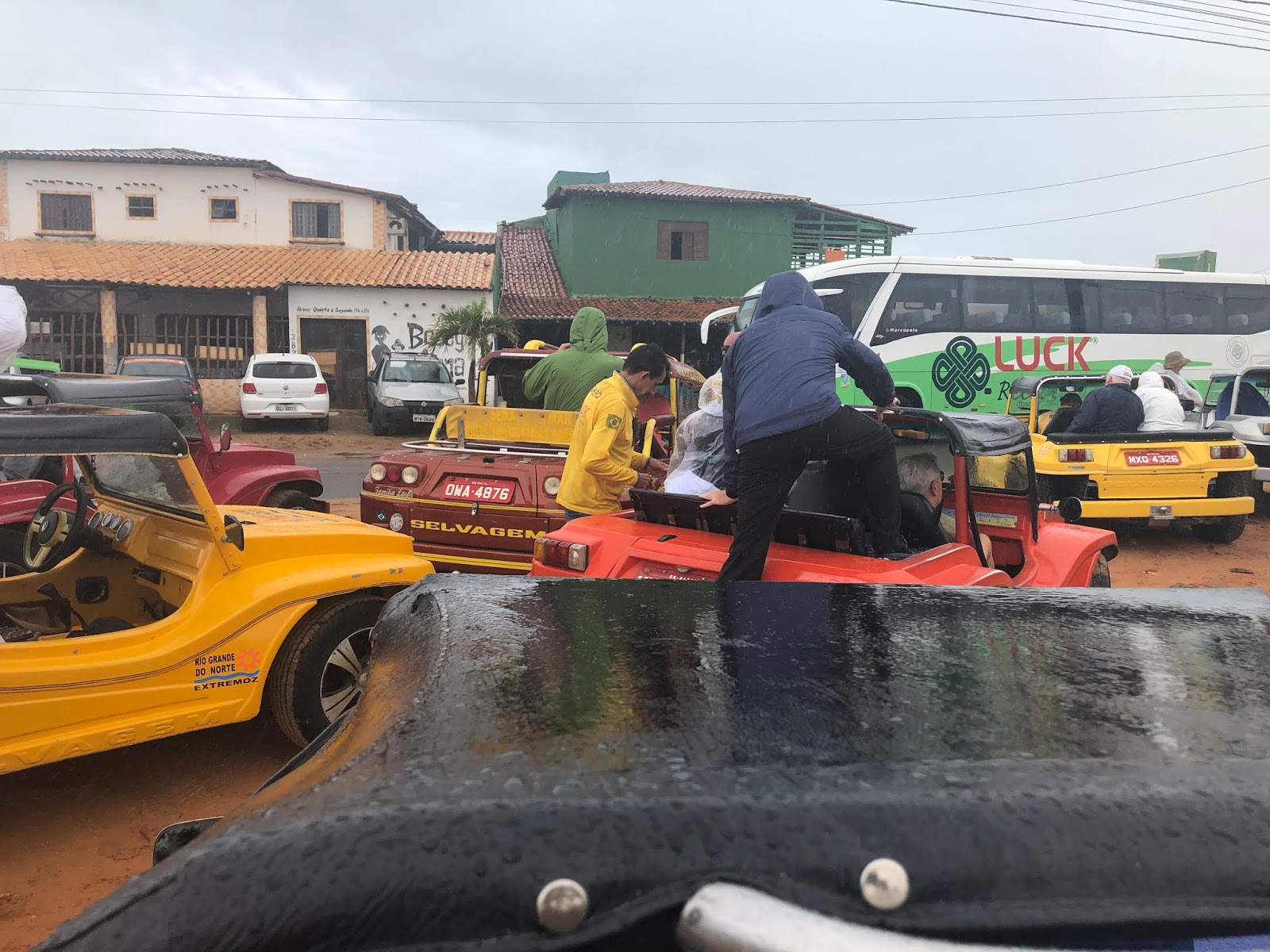
Of course neither of us were smart enough to bring any rain gear.


We got to select our driver and chariot. Our driver, "Shorty" (we never learned his name, but he could not have been more than 5 foot tall), looked as old as I am so I thought he probably had experienced every mistake there could be and was still alive.


We started out going to the top of the main dunes for some photo ops of the city in the distance and the marshes/dunes in the other direction.


Our chariot


Shorty


Shorty asked us if we wanted an exhilarating ride? Of course we told him "até o limite!"...to the limit! He did not let us down. Seat belts??? We didn't need any stinking seat belts!!! Although I noticed Shorty did wear his, there were no belts in the back where we were sitting.


We had one river to ford using two vehicle barges propelled by a pole-wielding gondolier.


We had a police escort throughout the trek to protect us from road bandits.


We drove over some pretty rough terrain, rough enough that I was holding on for dear life and not even considering trying to take photos. Only once did I hear Shorty exclaim "UH OH" as we slid sideways down a very steep sand dune.

The rain got so heavy, we could not see where we were going anyway. After awhile, we stopped for a refreshing pineapple (non alcoholic) drink.


It was about 3:00 pm when it was time to decide whether to go on to the next stop for a little zip-lining, or to head back over the dunes. We decided to head back as zip-lining in pouring rain into a lake did not seem appealing at that time.

We got about a mile down the road before Shorty realized we had a flat tire. So, we stood around in the pouring rain for about 20 minutes while Shorty tried to pump the tire back up with a basketball air pump. Then he noticed a sedan coming down the road. He waived the driver down and spent quite some time convincing the fellow that he should take us back to where the bus was waiting. Finally, the driver acquiesced. It took about 30 minutes to get back to the bus since we had to use the established roads which were poor to begin with and were mostly under a lot of water.


We finally got back to the ship, soaking wet and very cold. I took a hot shower and felt much better. We pulled out of port and bid goodbye to Natal.


Thursday, January 16, 2020

Day 12/12: Thursday, January 16, 2020: Fortaleza, Brazil

Our first Brazilian port! Fortaleza is the capital of the northeastern Brazilian state of Ceará. It's known as "The City of Light" due to its location near the equator which prolongs the daylight hours. It is also known for its beaches, which are punctuated by red cliffs, palm trees, dunes, lagoons and high crime rate. Fortaleza’s long-standing folkloric traditions are presented in dance performances at the art nouveau José de Alencar theater, open since 1910. With a population of 2.7 million, it is the fifth largest city in Brazil. The city lies at the mouth of the Pajeú River.


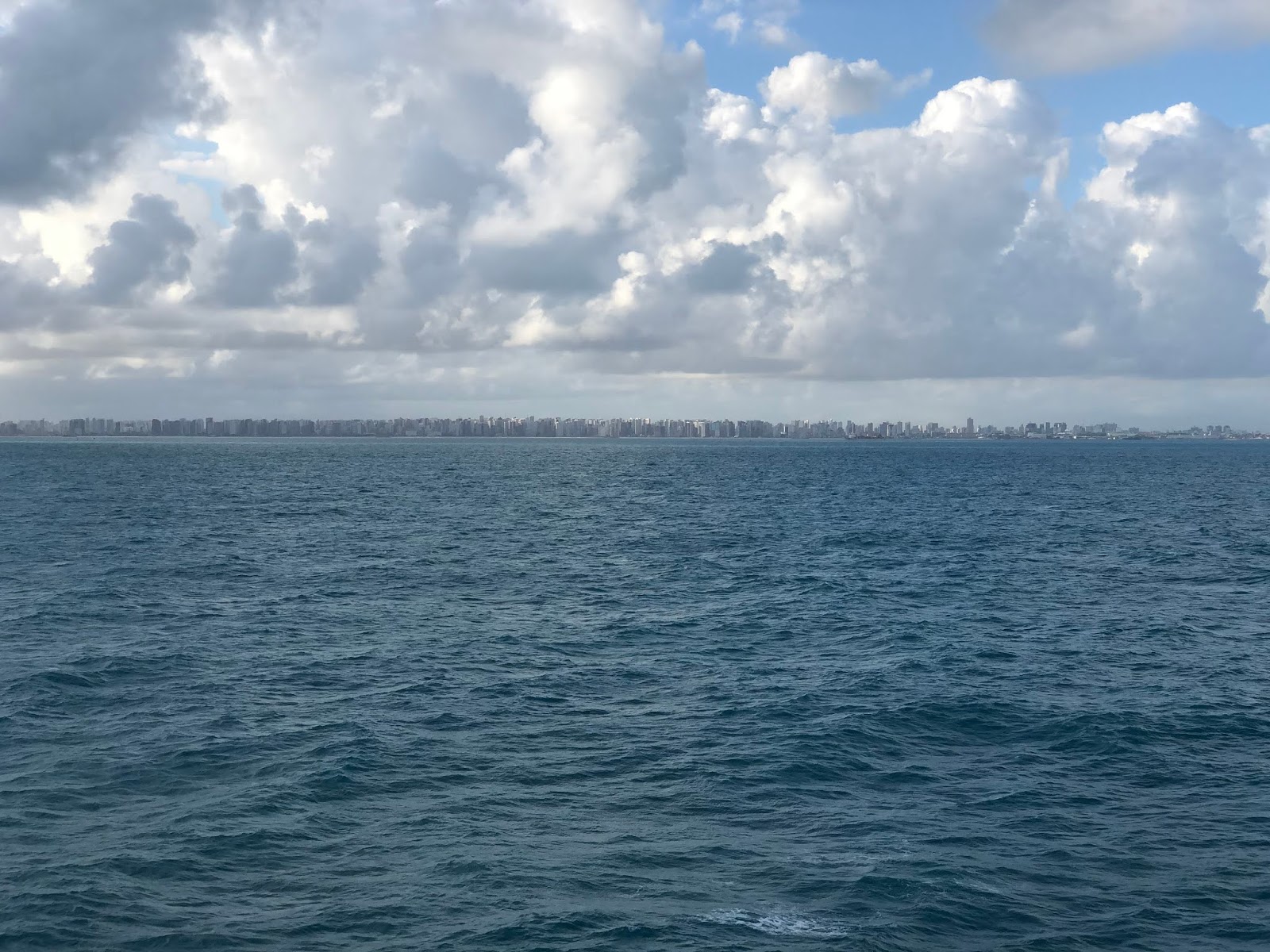
What first struck me looking at the city was how uniform the building heights were and how far the buildings stretched along the shore.


Billowing cloudy skies and lots of sun. Today we have a scheduled overview of Fortaleza starting at 1:00 pm. The ship arrived at dock at 8:00am and will depart at 5:30 pm this afternoon. Around 10:00 am, we decided to take the shuttle into town to look around for a bit before the tour in the afternoon. The shuttle ride took about 20 minutes.


They are in the process of widening the beach front road so there was construction vehicles wondering among the sunbathers. I also found it interesting to see all the trash everywhere you look. This was to be a common theme on all our Brazilian port stops. We roamed up along the beach for a couple of miles before heading back to where the shuttle bus would pick us up to return to the ship. We needed to get our tickets and have lunch before the afternoon tour began.


The afternoon tour was interesting. The city is comprised of a mixture of high rise buildings and shanty residences. There does not appear to be any zoning restrictions. If there is vacant land, someone will start building a shanty town on it.


The Fortaleza Cathedral.


We lit a candle for Terri.


The fort in the middle of the city (Fort Schoonenborch) built by the Dutch during their second occupation of the city in 1649. In 1654, the Dutch handed over this fortress to the Portuguese, who renamed it Fortaleza da Nossa Senhora de Assunção ("Fort of Our Lady of the Assumption"), after which the city of Fortaleza takes its name.


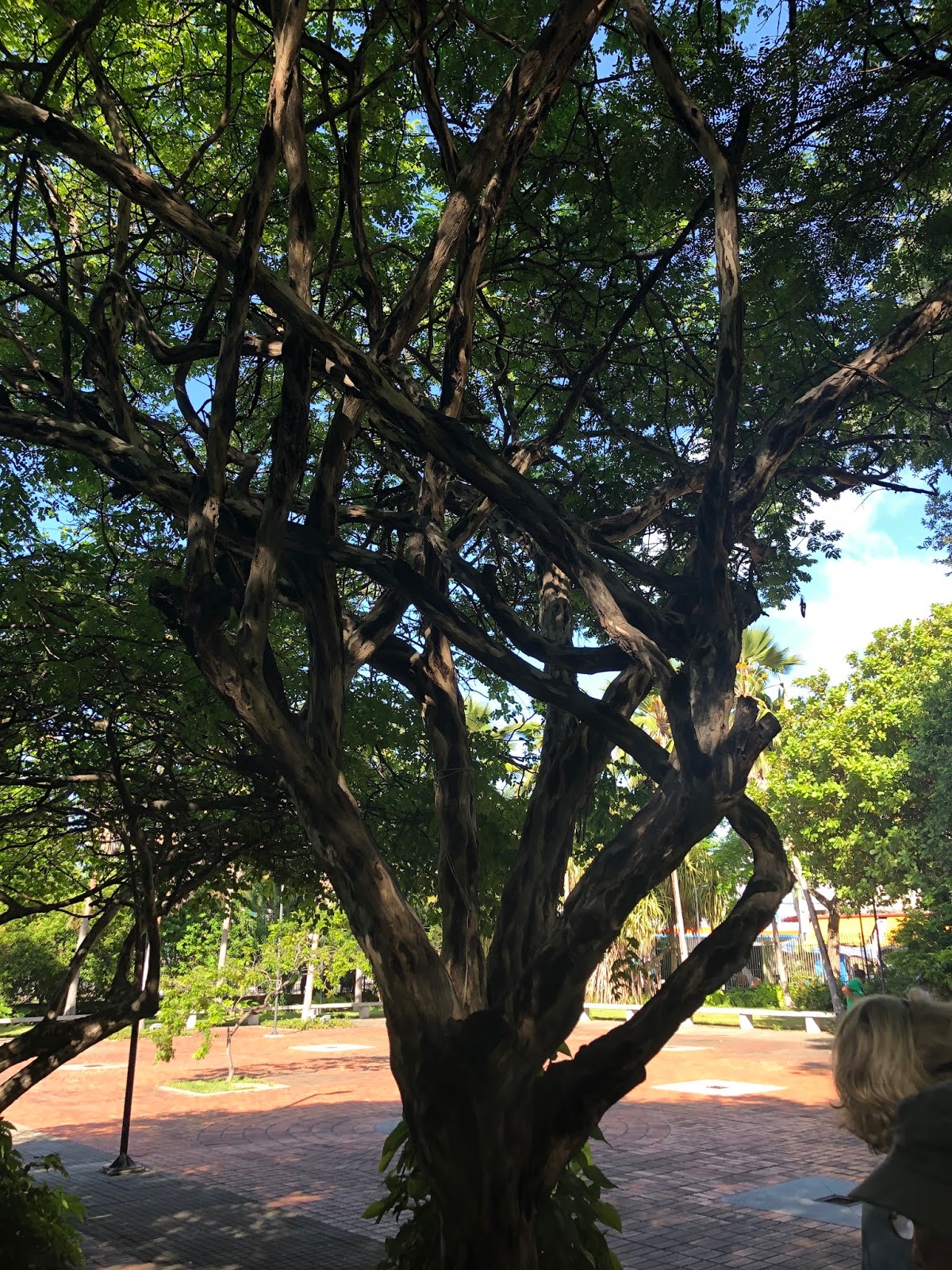
A cashew tree in the garden of the theater. The cashew tree is native to Brazil. It was taken by the Portuguese from Brazil to the Far East where today, Vietnam is the world's largest cashew producer with Brazil being number two.


There was a rehearsal going on in the theater.


Fortaleza used to have a prison in the middle of town. Many years ago, as the city grew, it was decided it was too dangerous to have the prison in the middle of the city, so they sent all the prisoners to Brazilia (where they became politicians) and turned the prison into a market place.


The cells are now individual vendor booths.


The last stop was at the city cultural center.


We drove back along the beach on the way to the ship. Again, tractors and heavy equipment mingled with the sunbathers and beach restaurants.


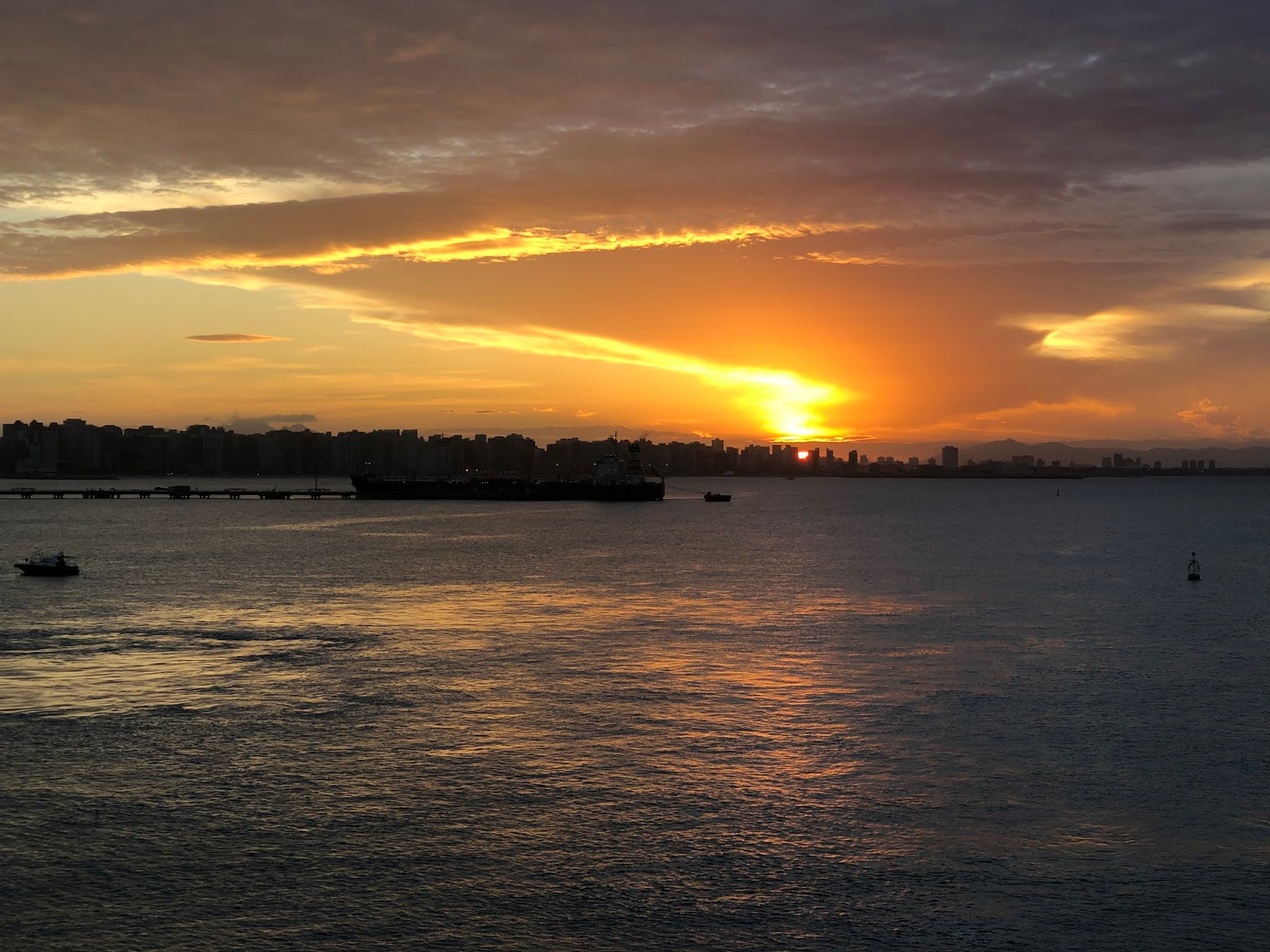
We pulled out of Fortaleza leaving a beautiful sunset.